


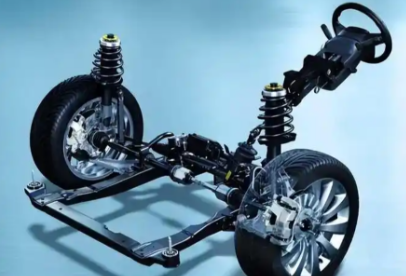
01. The Importance of the Anti-roll Bar Ball Joint
The anti-roll bar ball joint, a seemingly insignificant component of the vehicle suspension system, actually plays a crucial role in vehicle handling and safety. Despite its small size, its function cannot be underestimated.
The anti-roll bar, also known as the stabilizer bar or anti-sway bar, has the core function of reducing the vehicle's roll during turns. The anti-roll bar ball joint, as an important connecting part of this system, cannot be ignored. Specifically, it has the following three major responsibilities: transmitting lateral forces to ensure the stability of the vehicle's posture; buffering vibrations during driving to enhance ride comfort; maintaining the geometric stability of the suspension system.
02. Common Faults and Causes
Next, let's take a look at the possible faults of the anti-roll bar ball joint and their causes. These faults are mostly related to wear and aging. Understanding this information will help you more effectively diagnose and repair them.
▍ Loose Ball Joint
A loose ball joint causes a "clunking" noise. This is the most common fault of the anti-roll bar ball joint. When the vehicle passes over speed bumps, turns, or drives on bumpy roads, a "clunk, clunk" impact sound will be heard near the front wheels, and the sound becomes more obvious as the road conditions deteriorate.
The main causes include: wear of the internal balls, over time, the gap between the balls and the inner and outer rings gradually increases, causing them to not fit tightly, resulting in impacts when force is applied; loose fixing bolts, which may be due to insufficient torque during installation or long-term vibration causing the bolts to loosen, creating a gap between the ball joint and the connecting parts; damage to the dust cover, when mud and water enter the ball joint, it will accelerate the wear of the balls and metal parts, thus creating a vicious cycle.
▍ Stuck Ball Joint
A stuck ball joint affects the smoothness of steering. When turning the steering wheel, there will be a noticeable lag and heaviness, and even after turning, the steering wheel cannot return to the center automatically and needs to be adjusted manually.
This is mainly caused by the following reasons: insufficient lubrication, the grease inside the ball joint dries up due to long-term use, causing dry friction between the balls and metal parts, thereby increasing the resistance during movement; rusting of the ball joint, after the dust cover is damaged, water enters the ball joint, causing the metal parts to rust and thus jamming the balls or moving parts, affecting their normal operation; deformation of the ball joint, during driving, the vehicle may experience severe impacts, such as high-speed potholes or hitting the curb, which may cause deformation of the ball joint's outer shell or internal structure, preventing it from moving smoothly.
▍ Ruptured Dust Cover
A ruptured dust cover accelerates the aging of the ball joint. As a protective device for the ball joint, once the dust cover is damaged or falls off, the ball joint will be directly exposed to harsh environments, thereby accelerating its aging and possibly causing other faults.
The main causes include: rubber aging, long-term exposure to high temperatures and oil contamination causes the dust cover material to harden and crack; physical damage, during driving, the dust cover is scratched by hard objects on the road, causing it to break; installation errors, during replacement of the ball joint, the dust cover is installed at an incorrect angle or is squeezed by bolts, resulting in cracks.
Please note: The anti-roll bar ball joint is a key component of the vehicle suspension system, and its condition directly affects the vehicle's driving performance and safety. Vehicle owners should regularly inspect and seek professional maintenance to ensure stable vehicle performance.